
Our objective is to provide open-source tools that help analyze the way multilingual code interoperates to address security issues, software design and refactoring, efficiency and correctness. The first step is to create call graphs that represent the relationship between C/C++, Python, and JavaScript programs. The MultiLingual Static Software Analysis software tool (MLSA, pronounced Melissa for convenience) is a tool that analyzes software that is written in multiple languages and in which the languages call each other and produces a multi-lingual call graph.
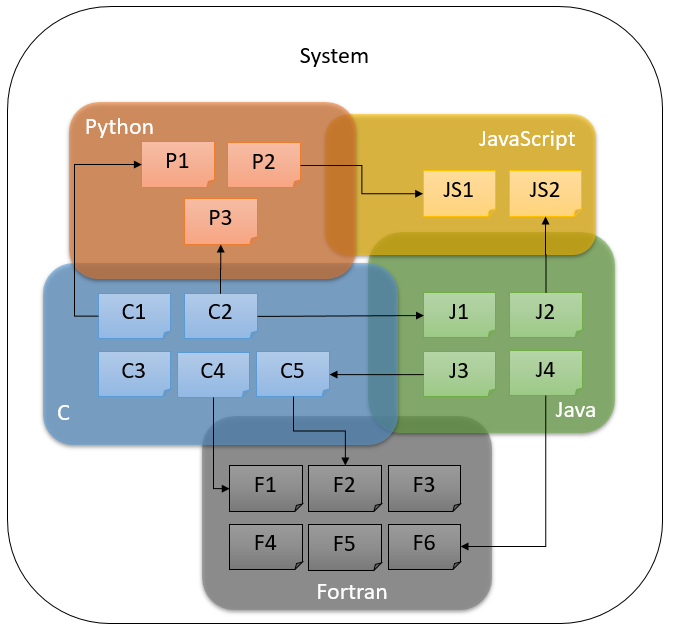
The MLSA software tool reviews function (procedure) calls within a set of source code files. It generates a call graph in csv/graphviz format with formatted information about function calls and their arguments and what files they are in. The tool is currently capable of analyzing programs in C/C++, Python and JavaScript, and in which a C/C++ program calls Python code through the python.h interface, a Python program calls C/C++ procedure using pybind11 interface, a Python program calls JavaScript code through PyV8 ‘s eval function, or a JavaScript program calls Python code through JQuery’s ajax command. The result in all cases is a call graph that includes procedures in all three languages showing their mutual call relationships. For more details, read on.